
Childbirth and Being Born 2025, December
MEMORIAL.
MICHEL ODENT, THE MISUNDERSTOOD GENIUS OF CHILDBIRTH BETWEEN DISCOVERIES AND INTUITIONS
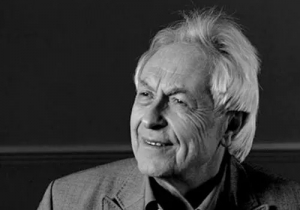 On 19 August, Michel Odent passed away at the age of 95. A world-renowned surgeon and author of over 100 articles in medical journals and 19 books translated into several languages, Odent made a fundamental contribution to our understanding of the physiological processes of childbirth and the correlation between what happens in the perinatal period and human health. His legacy is so vast and endowed with such extraordinary vision that it will probably take many more years before his insights are known and integrated, as is often the case with brilliant minds.
He was born on 7 July 1930 in Oise, France, at home, as he liked to narrate in his seminars, which were always enriched here and there with anecdotes from real life, not strictly personal, but anecdotes with a value from which general observations could be drawn.
At the beginning of his career, he worked as a war surgeon in Algeria and Guinea, an experience that, in my opinion, meant a great deal for the development of his aptitude for medicine and research. When you work in emergency situations, in unfavorable contexts such as war, you learn to make do with what you have and, above all, with what you don’t have… You learn to observe and act not so much by following theories but by constantly learning from practice, from the evidence of what is revealed, without too many frills and useless rhetoric. This is why I think Michel Odent can rightly be considered an exceptional guest in the Ferenczi world, precisely because of his aptitude for going beyond the reference paradigms of a certain historical context and observing the evidence instead, as Ferenczi reminds us when something is not working with our patients, we must think about what is not working in ourselves, until we have the courage to leave a path that may be considered valid from a theoretical point of view and take another that is completely adapted to the patient’s needs and works.
Michel’s path of thought and practice was one of continuous adaptation to what women showed him. He continually changed, transformed and enriched his thinking based on his observations in the field.
His experience in the field of childbirth began with his arrival in 1962 at the public hospital in Pithiviers, where he remained until 1985, when he moved to London. At that time, gynecology was not yet established as a specific branch of medicine as it is today. The obstetrics department at Pithiviers Hospital was short of a surgeon, and he found himself performing surgery when deliveries became difficult and cesarean sections were required.
Michel Odent began his adventure in childbirth as a surgeon performing cesarean sections, and it was from this particular perspective that his insights began. He observed that when a birth became complicated and a cesarean section was required, certain factors were repeated, such as excessive solicitude on the part of the staff or the agitation of the woman who felt alone and physically exposed (standard gynecological position), and in general he began to focus his attention on the environment surrounding the birth process. He therefore tried to change the environment, making it less cold and medicalized, dimming the lights in the delivery room, promoting greater intimacy for the woman and greater freedom of movement, i.e. moving and assuming the positions that were most comfortable for her, and even experimenting with small pools of warm water when a woman had too strong pain and labor was not progressing (in which the woman could immerse herself if she wished), which often seemed to promote dilation.
This led to the creation of what became known as “wild rooms”, rooms free of all the typical clinical equipment and made to resemble a hotel double room with bath, where women were free to move around and be accompanied by one single midwife, more protecting the space then active (family members). He also noticed that some women sought and found relief having a shower or a bath, so he set up inflatable pools. The Pithiviers clinic became known worldwide as a pioneer of water birth. In this clinic, which saw 1,000 births a year, Odent observed that under certain conditions, birth was usually quick, easy and without negative consequences for mother and baby.
This important experience is described at length in his famous book “Birth Reborn” (Published in italian under the title “Ecologia della nascita”), in which he shares his observations and the changes he introduced to childbirth care. In 1983, Michel Odent wrote an article published in the prestigious medical journal The Lancet entitled “Birth under Water” (Odent, 1983) .
This first part of his experience was only the prelude to the development of his observations. Michel Odent went far beyond “the wild room” to get to the heart of the processes of childbirth, the role of hormones and the many issues surrounding what he calls “the primal period”, i.e. the period from conception to the first year of life, a period that is fundamental to human health. He largely anticipates future discoveries in epigenetics and neuroscience. After leaving Pithiviers in 1985, he moved to London, where he remained until his death, and founded Primal Health Research, a database with hundreds of references to published studies that examined the correlations between the “primal period” and future health and behavior. “From an overview of our database, it appears that whenever researchers focused on individuals who showed a kind of ‘reduced capacity to love”, both themselves and others, risk factors always emerged in the period around birth. Furthermore, when these correlations were highlighted, they always concerned burning issues of our time.” Odent’s theories subvert the coordinates with which we are accustomed to thinking about humans, overturning our perspective and leaving us astonished by their evidence.
His best-selling book “Votre bèbè est le plus beau des mammiferes” (Odent, 1990)(in English “Birth and Breastfeeding” 1992) gives us a deep understanding of how a child’s development begins in interaction with the mother in the very first moments after birth, thanks to undisturbed contact. Studies on colostrum, the very first milk secreted immediately after birth (considered “bad” for centuries and in many cultures) are crucial to understanding how essential undisturbed first contact is for health. He writes: “The children of the colostrum era will be different from those scholars talk about today. … The colostrum revolution will challenge many common assumptions about newborns. For example, it is still considered normal for a newborn to lose weight in the first two or three days and return to their birth weight around eight days later. This is called “physiological weight loss”. Home birth has allowed me to observe another kind of baby: at three hours old, they have already spent two hours suckling vigorously; babies who maintain skin contact with their mothers, day and night, in a familiar environment. Among them, one in three does not experience physiological weight loss and their initial weight is well exceeded by the age of one week. These newborns teach us that weight loss is not mandatory. Perhaps it is not even physiological, even though it has probably occurred in most human cultures.” (Odent, 1992).
As is the case with curious and daring thinkers, Michel has no difficulty in continually evolving his thinking, without the need for theoretical support, and goes beyond the experience of Pithiviers, questioning how not to disturb, whether and why childbirth should be difficult and what instead makes it a physiological event without complications, as is the case with all mammals, of which we are evolutionarily a part. He described the fetal ejection reflex, the involuntary process by which the baby is rapidly and completely expelled from the vagina, as the essence of physiological birth. Like the sperm ejection reflex and the breast milk ejection reflex, the fetal ejection reflex is involuntary and belongs to our archaic brain, which is capable of promoting mating and nurturing. Thus began his revolutionary investigation into the role of hormones, which would be encapsulated in the visionary book “The Functions of Orgasms” (2009), echoing the title of Wilhelm Reich’s well-known book, in which he highlighted how sexual coupling, childbirth and breastfeeding (but also other transcendental states) are fundamental processes of human life characterized by specific hormonal cocktails, the so-called “love hormones” that ensure a good start to breastfeeding and the mother-child relationship, as well as a good connection during sexual intercourse. Childbirth can be a fully pleasurable experience for women if they are able to give birth without any disturbances and thus enjoy a good fetal ejection reflex. The development of the neocortex, which distinguishes us from other mammals, is what makes childbirth difficult: “The interpretation of the fetal ejection reflex leads us to understand how the reduction in the activity of the new, powerful brain is the solution devised by Nature to overcome the specifically human handicap in the period around birth. One of the reasons why childbirth in humans is difficult, compared to childbirth in other mammals, lies precisely in the enormous development of the neocortex. The development of this “intellectual brain” is, in certain situations, an impediment, as it is a source of inhibition, especially at the moment of birth, but also in all other forms of sexual experience.” (Odent, 2009). To facilitate childbirth and the fetal ejection reflex, it is necessary to reduce the neocortex’s activity, protect it from any stimuli and allow the woman to “leave for another planet”, as he liked to say. The study of cultural influences and rituals surrounding the female body and birth, which aim to disrupt the first contact with the baby and imprinting as the first form of love, are at the center of his analysis and show us how the socialization of childbirth has been widespread throughout the world for millennia, causing a progressive disturbance and alteration in the initiation of the processes of adaptation to life. The medicalization of birth, which has characterized the last century, has further contributed to disrupting these processes of adaptation and human connection to such an extent that Odent warns us that the human being’s capacity to love and to reach orgasmic and transcendental states is in danger. One of his central concepts is that of spontaneous labor onset: today we are witnessing the systematic and large-scale use of synthetic oxytocin to induce labor, effectively preventing most babies from coming into the world through an endogenous drive thanks to the natural cocktail of hormones, what Winnicott called the “vital propulsive drive” is a neglected experience today! This is a perspective that we psychoanalysts, who are observing an exponential increase in emotional regulation disorders and violence towards oneself and others, should definitely consider.
Odent has observed the beliefs and rituals prevalent in the field of birth from all angles and has been able to see how these influences act deeply and unconsciously even in so-called “natural” approaches to childbirth. The great misunderstanding is to believe that women need help to give birth and therefore to use every means, both medical and natural, to help them. We should abandon the idea that woman need to prepare for childbirth, to receive education or awareness. The childbirth is a physiological involuntary event. This is the essence of the disorder and socialization of birth, and this is what, in my opinion, has led to the way women have been treated for millennia. We have one of his books is entitled “Do we need midwives?”
It is impossible to summarize in a single article all his insights, his vision of human beings, his studies on pleasure, caesex and our marine origins. He devoted the last forty years of his life entirely to spreading his ideas, leading seminars and presentations all over the world, with his extraordinary oratory skills, always faithful to a scientific rigor that is not seduced by any attempt at theorizing, but proceeds in a constant dialogue between open questions, questions and evidence, with particular criticism of what he called “cul de sac” scientific research, so widespread today, in which the number of publications is pursued and studies of little value are repeated because they lack the right questions at the outset. It is no coincidence that one of his best-known books is entitled “The Scientification of Love”, precisely to gather together the evidence that the capacity to love has solid scientific foundations and is based on species-specific biological processes.
His seminars in Italy have been constant and very popular for years, from 2007 until 2025 thanks to Clara Scropetta, his faithful translator who has accompanied him for almost twenty years in seminars and in the translation of his numerous books. Clara Scropetta, a pharmaceutical chemist, mother of three children, doula and freelance researcher in the field of birth, carries on Odent’s message with passion and dedication, having known him closely. She has a rich archive of recordings of his contributions and can be said to be the heir to his thinking, together with Liliana Lammers, doula and Michel’s lifelong companion. His latest books represent the pinnacle of his work and, in my opinion, have something mystical and visionary about them: The Future of Homo (2019) and Planet Ocean: Our Mysterious Connections to Water (2021), Can Humanity survive socialized Birth? (2023), The dusk of Homo (2024). Like Ferenczi with Thalassa, Odent also considers the marine origin of human life and suggests that the Earth should be called Planet Sea rather than Planet Earth. There is nothing more to say, without risking being reductive, Michel Odent should be read and listened to in his recordings.
* For those interested in learning more about his contributions and attending his (recorded) seminars, please contact Clara Scropetta, email: clara_scropetta@hotmail.com.
Reference
Ferenczi (1924). “Thalassa: A Theory of Genitality”, 1938, The Psychoanalytic Quarterly.
Odent M. (2024). The dusk of Homo, Le crépuscole d’Homo. Hetre Myriadis
Odent M. (2023). Can Humanity survive socialized Birth? Pinter & Martin
Odent M. (2021). Planet ocean: our mysterious connections to water. Clairview Books.
Odent M. (2019). The future of Homo. World Scientific.
Odent M. (2009). The functions of the orgasms: the nighways to transcendence. Pinter & Martin.
Odent M. (1999). The scientification of love. Free Association Books
Odent M. (1990). Votre bébé est le plus beau des mammiféres. Albin Michel
Odent M. (1975). Do we need midwives? Pinter & Martin